
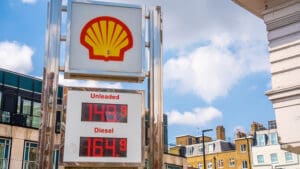
Petrol prices across the United Kingdom have climbed to an average of 154.65p per litre, marking the highest level since October 2023 and representing a rise of nearly 20p since the outbreak of hostilities with Iran six weeks ago.
Diesel, meanwhile, has reached 186.75p per litre on average, a level not seen since November 2022, with some motorists reporting prices in excess of £2 per litre at individual forecourts.
The surge, which amounts to a rise of more than 17 per cent since the conflict began, has been driven largely by disruption to global supply routes, particularly through the Strait of Hormuz, a critical chokepoint for international oil shipments. In the United States, average petrol prices have jumped more than 20 per cent over the past month alone, from $3.45 to $4.16 per gallon, adding to the political pressures facing President Donald Trump ahead of November’s mid-term elections.
However, there was a measure of relief for markets on Wednesday following news of a 14-day ceasefire agreement between Washington and Tehran. Brent crude fell sharply in response, dropping roughly 13 per cent to approximately $95 (£71) per barrel.
Despite the positive signals from the ceasefire, industry experts have cautioned that relief at the pumps is unlikely to arrive quickly. Prem Raja, head of the trading floor at Currencies 4 You, noted that petrol prices typically lag behind movements in crude oil, meaning the recent drop in wholesale costs will take time to filter through to forecourts.
Raja suggested that prices are likely near or at their peak, provided the ceasefire holds, but warned that the descent would be gradual. He pointed to the disruption in flows through the Strait of Hormuz as a factor that could keep prices elevated in the near term, and urged drivers to shop around for better deals, particularly by avoiding motorway service stations in favour of local forecourts.
Tony Redondo, founder of Newquay-based Cosmos Currency Exchange, described the dynamic as a classic example of the so-called “rocket and feather” effect, where prices rise rapidly but fall far more slowly. He indicated that petrol could remain above 145p per litre through the summer, even if wholesale costs stabilise, with the risk premium on Middle Eastern supply routes continuing to weigh on the market.
Redondo also flagged the scheduled tapering of the government’s 5p fuel duty cut from September 2026 as a further headwind for drivers, potentially offsetting any benefit from falling global oil prices. In the meantime, he advised motorists to favour supermarket forecourts, which on average charge 4.4p per litre less than branded stations.
Antonia Medlicott, founder and managing director of London-based Investing Insiders, struck a cautious note, arguing that the price spike reflects the market pricing in risk rather than an immediate supply shortage. She suggested that stabilisation could come sooner than previously anticipated, provided there is no further escalation, but warned against expecting swift relief at the pumps.
Medlicott emphasised the broader concern for household finances, noting that while individual price spikes may prove temporary, the cumulative impact of repeated shocks on everyday living costs can be both significant and enduring.
Perhaps the starkest warning came from Samuel Mather-Holgate, managing director and independent financial adviser at Swindon-based Mather and Murray Financial, who argued that petrol prices are likely to remain elevated for some time. He pointed to the continued involvement of Israel in the wider regional tensions as a source of ongoing market uncertainty, suggesting that a lasting peace may still be some distance away.
Mather-Holgate cautioned that despite the ceasefire, volatility in oil markets would persist, and did not rule out the possibility of fuel reaching £2 per litre even with peace talks on the horizon. His assessment serves as a reminder that for British motorists, the road back to cheaper fuel may be a long one.
Read more:
UK petrol prices approach 155p a litre as Iran conflict drives fuel costs to highest level in over two years