
Benjamin Giltner
Last week, the Department of Defense released President Trump’s requested defense budget for fiscal year 2027. It’s a staggering $1.5 trillion and in inflation-adjusted dollars, it surpasses defense spending during the Vietnam War and Reagan military buildup.
America’s overextended military strategy is a major reason for such an expensive budget. More military goals require more weapons and troops, which means more money for defense. But there is another reason for this exorbitant defense budget: wasteful weapons. Using the Department of Defense’s data on procurement and research, development, test, and evaluation program costs, I have identified five wasteful weapons programs in next year’s defense budget request.
First is the F‑35, the fighter jet that just keeps on giving. Taking into account all versions of the fighter, the Pentagon is requesting $18.8 billion in acquisition costs for 2027. The aircraft’s upkeep is extremely costly, requiring almost constant maintenance and repairs. And when it comes to providing air support to ground troops, it’s worse than the A‑10, the aircraft the F‑35 was dubbed to replace.
Second is the Golden Dome missile defense system. The Pentagon is requesting $19.4 billion to fund just research and development for the project. If it already costs this much now, think of how much Golden Dome will cost taxpayers when the Pentagon actually buys these weapons and must pay for their repair and maintenance. All in, the missile defense system is estimated to cost up to $1.1 trillion. Given the tendency of weapons programs to cost more than initially intended, it’s safe to say that Golden Dome will cost the American people well above $1.1 trillion over its lifetime.
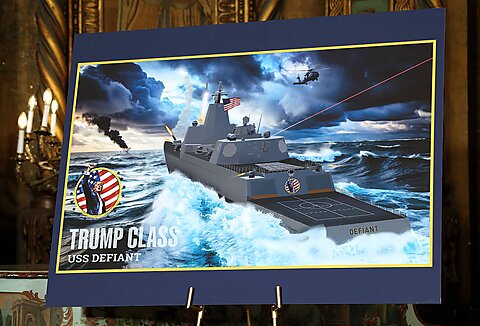
Another unneeded weapon is the Trump-class battleship. The Department of Defense is seeking around $1 billion dollars in 2027 for the ship. While this is chump change compared to the rest of the defense budget, this money is for advanced procurement, meaning the US would spend money now to acquire the weapon later. The total cost of getting just one of these battleships could be close to $20 billion. Due to the rise of air power and use of submarines, battleships became largely obsolete in the mid-20th century. Today, advanced anti-ship missiles would make these vessels even more vulnerable.
Fourth is the land-based LGM-35A Sentinel intercontinental ballistic missile (ICBM) system. The Pentagon is seeking roughly $4.6 billion in acquisition funds for this leg of the nuclear triad. This missile system is set to replace America’s current ICBM system, the Minuteman II, which is undoubtedly outdated. But the United States does not need ICBMs. Unlike nuclear-armed submarines, ICBMs are vulnerable to enemy strikes and don’t provide an escalation off-ramp like bombers do. A military can tell its bombers to fly back home, not so with a launched missile.
Finally, there’s the F‑47 stealth aircraft, which the Pentagon looks to spend around $5 billion on in 2027 for research and development. With its stealth bombers, the F‑35, and the increased use of unmanned systems, it’s unclear why the United States needs the F‑47. And given the F‑35s much higher costs compared to initial estimates, it’s likely that the F‑47 will come with a sizeable price tag in the years to come. The F‑47 seems to be just another flashy ticket item in the defense budget.
Just these five weapons projects will cost the American people around $48.8 billion in 2027. Other reforms and the drawing down of US military commitments abroad are needed to fix America’s expensive military problem, but identifying unnecessary and wasteful Pentagon programs is a start.