
Stephen Richer
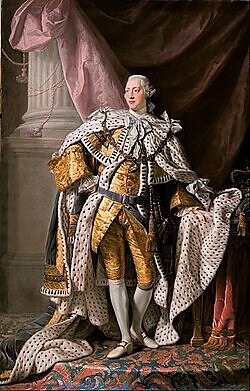
At the beginning of Trump’s second term as president, Jonathan Rauch introduced readers of The Atlantic to the word “patrimonialism,” as the “default form of rule in the premodern world … [in which the] state was little more than the extended ‘household’ of the ruler; it did not exist as a separate entity.” Trump, Rauch argued, isn’t a conservative or a liberal. He’s a patrimonialist.
The past 24 hours make a convincing case for Rauch’s term.
On April 28, NBC News reported that the Federal Communications Commission ordered Disney to file its broadcast license renewals ahead of schedule. This seemingly stemmed from a joke made last week by late-night comedian Jimmy Kimmel on ABC (which Disney owns) that landed poorly with first lady Melania Trump (“His monologue about my family isn’t comedy; his words are corrosive and deepen the political sickness within America. People like Kimmel shouldn’t have the opportunity to enter our homes each evening to spread hate.”) Trump joined his wife, posting, “Jimmy Kimmel should be immediately fired by Disney and ABC.”
Reasonable people can disagree if Kimmel’s joke was funny. No reasonable person could say the joke incited violence or was terribly unusual for late-night comedy.
But Trump, a patrimonialist, is directing the federal government to punish the comedian and the company that gave offense to his wife.
Similarly, and at almost the exact same time, CNN reported that the DOJ had indicted former FBI Director James Comey for his seashell rendition of “86 47” from May 2025. At the time, I, and presumably many others, had to learn that to “86” something means to get rid of it. Trump, Kash Patel, and Kristi Noem interpreted Comey’s post to be a threat of physical violence toward the president, and they promptly sent federal law enforcement to investigate Comey.
Nevermind that Comey had deleted the post. Nevermind that Comey had apologized. Nevermind that Comey said he hadn’t intended to issue a threat. Nevermind that thousands of people every day talk about “getting rid of” certain politicians. And never mind that some of Trump’s own high-profile supporters previously wanted to “86 46” when Joe Biden was president.
Again, Trump sees the federal government as a vehicle for achieving his own interests. The Eastern District of Virginia previously failed to successfully ruin Comey’s life on a previous criminal charge. Now the government is trying again. And in doing so, it produced an indictment that I’d be hard pressed to read out loud without laughing:
the defendant, JAMES BRIEN COMEY JR, did knowingly and willfully make a threat to take the life of, and to inflict bodily harm upon, the President of the United States, in that he publicly posted a photograph on the internet social media site Instagram which depicted seashells arranged in a pattern making out ‘86 47’, which a reasonable recipient who is familiar with the circumstances would interpret as a serious expression of an intent to do harm to the President of the United States.
Least seriously, but most symbolically, in the same 24-hour period, The Bulwark revealed that the State Department plans to include a picture of Trump in new US passports. Instead of being greeted by a flag, or the US Constitution, the inside flap of the new passport will feature a menacing scowl of Trump—the alpha and omega of American governance and identity.
Trump is by no means the first politician to act for private gain. Private use of governmental power is a concept so ancient, so storied that nobody said, “that wouldn’t possibly happen!” when the king in Mel Brooks’s “History of the World Part I” regularly used his governing authority for … personal indulgences … (“It’s good to be the king!”)
Nixon had an “enemies list” that he harassed with the FBI and IRS. The link between IRS investigations and Obama’s political enemies was less direct, but it certainly seemed suspicious. Ron DeSantis moved to strip Disney of special district privileges after a political spat. Huey Long was so bold that he even celebrated his effectiveness at using government as a tool for punishing personal enemies. And Truman used stationery from the White House to threaten the journalist who criticized Margaret Truman’s (Truman’s daughter) singing performance (“Some day I hope to meet you. When that happens, you’ll need a new nose, a lot of beefsteak for black eyes, and perhaps a supporter below!”).
What’s different today is, first, the scope. This week it’s Trump’s face on the US passport. Previously, it was his face outside the Department of Labor. Or the Department of Justice. Or his name on the Kennedy Center. Or this week, it’s using law enforcement to punish Jimmy Kimmel. Previously, it was using the pardon power to exonerate a cryptocurrency criminal who had enriched the Trump family.
It’s also different today because Congress—the branch of government that could effectively check Trump—has zero interest in exercising any constraining authority.
Accordingly, Trump is allowed to use the federal government as he did with many other private businesses he ran throughout his life. He used those private businesses to make money, give friends jobs, and, yes, to boldly thrust his name into your face.
Now he’s doing so with the federal government.
And wouldn’t you know it, today the office White House X account posted a picture of Trump with King Charles of England and wrote “TWO KINGS.”
America has no king. America needs no king.