
Tariffs raised costs for some of America’s biggest retailers over the past year.
That put pressure on companies to raise prices, negotiate with suppliers, or, in some cases, absorb more of the expense themselves.
Consumers ultimately felt at least part of that pressure.
Federal Reserve researchers found that tariff-related price increases occurred gradually through 2025 rather than in a single sudden jump.
Prices for goods imported from China were about 8.5% higher in December 2025 than a year earlier. Researchers estimated that at least 30% of the tariff increase between April and December had been passed through to consumers.
The study also found that many retailers initially absorbed some of the added costs as shoppers remained price-sensitive and companies worked through inventory purchased before tariffs took effect.
Now, billions of those tariff dollars are coming back.
The U.S. Supreme Court ruled on Feb. 20 that the International Emergency Economic Powers Act, or IEEPA, did not authorize the tariffs challenged in the case.
The Court of International Trade subsequently directed U.S. Customs and Border Protection to liquidate or reliquidate eligible entries without the IEEPA duties, clearing a path for refunds.
That means eligible companies can recover duties they previously paid under the invalidated tariffs.
But this has created an unusual question for consumers: If retailers raised prices or otherwise changed their businesses because of tariffs, what happens when those companies get the tariff money back?
There is no single answer.
Bank of America’s latest retail tariff tracker, shared with TheStreet, also shows how differently companies are using the refunds.
The firm found that a broad group of retailers is reinvesting the money into prices, value, and other customer-facing initiatives, while others are using it to absorb higher freight and fuel costs.
Big name retailers like Walmart, Home Depot, TJX, Williams-Sonoma, and Lowe’s have collectively recognized billions of dollars in tariff refunds or related benefits.
Some are putting the money toward prices or other customer investments. Others are offsetting higher operating costs, rewarding employees, or reimbursing suppliers.
For shoppers, receiving a tariff refund does not necessarily result in a refund at checkout.
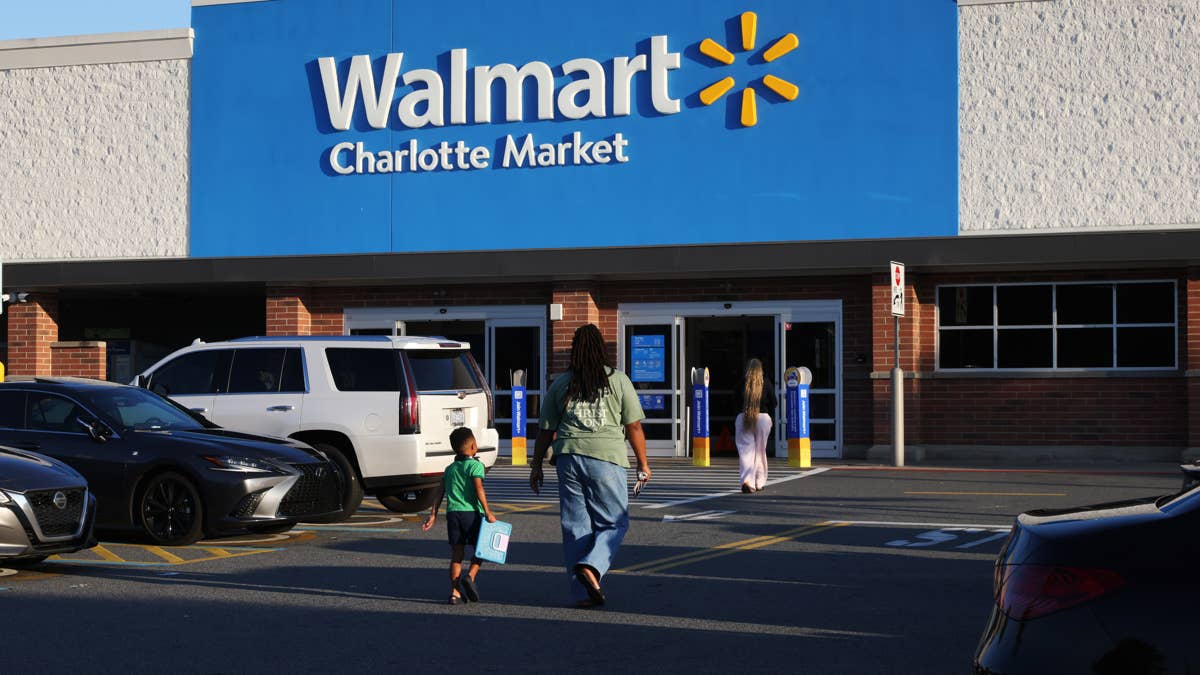
Walmart puts tariff refunds toward prices
Walmart has by far received the largest refund among the five retailers.
The company received approximately $2.9 billion in tariff refunds during its fiscal second quarter, representing substantially all of the refunds it had requested at the time, according to its quarterly filing.
For Walmart shoppers, at least part of that money is being directed back toward prices.
The retailer said a significant portion of the refunds was invested in customer-focused initiatives during the quarter, primarily through price investments and other cost-mitigation strategies.
Walmart plans to continue prioritizing tariff refunds for price investments through fiscal 2027.
The refunds also boosted Walmart’s profitability. Its U.S. gross profit rate benefited from these reimbursements, but the gain was partially offset by lower-priced investments and higher fuel costs.
Walmart is not mailing customers checks for tariffs. Instead, it is using some of the recovered money to help fund lower prices going forward.
BofA estimates Walmart will have roughly a $600 million net benefit after its third-quarter price investments. When the second and third quarters are considered together, however, the firm expects tariff refunds to have relatively little net impact on earnings because much of the benefit is being reinvested.
For a retailer whose business is heavily built around price, this gives Walmart more room to compete on value without absorbing the full cost itself.
Consumers could ultimately benefit through more aggressive pricing.
Bloomberg / Getty Images
Home Depot uses refunds to absorb rising costs
Home Depot is taking a different approach.
The home-improvement retailer received approximately $730 million in IEEPA tariff refunds during its second quarter. About $685 million reduced the cost of goods already sold, while another $45 million remained tied to inventory.
But shoppers should not expect the entire benefit to translate into new discounts.
Home Depot’s CFO, Richard McPhail, said the company is using the refunds to offset unplanned increases in fuel, energy, and other product-input costs throughout the year.
Its fiscal 2026 outlook similarly assumed that tariff refunds will partially offset those higher expenses.
This makes the consumer benefit less visible than at Walmart.
The refunds could help the company avoid passing as much cost pressure on to shoppers. However, Home Depot has not said every refunded tariff dollar will result in a corresponding price reduction.
Lowe’s says future refunds will go back into customer value
Lowe’s received a smaller tariff benefit during its latest quarter.
The company recognized approximately $80 million in pretax IEEPA tariff refunds during the second quarter. The benefit contributed about 11 cents to earnings per share.
However, much of that benefit was effectively swallowed by other expenses.
Chief Financial Officer Brandon Sink said on Lowe’s earnings call that the $80 million benefit was largely offset by higher fuel and transportation costs.
More Retail:
- Home Depot is making a big bet on cautious consumers
- Another state just banned a controversial retail pricing practice
- JPMorgan just flagged a slow-build food crisis
Lowe’s expects to receive more tariff refunds during the second half of the year than it recognized in the second quarter. Those refunds are not included in the company’s fiscal 2026 guidance, leaving additional room for customer-facing investments if the money arrives as expected.
For shoppers, this means the initial refund did little to create a large new pool of money for discounts because other costs were rising at the same time.
Future refunds, however, could have a more direct effect on pricing, promotions, or other customer investments if Lowe’s receives them.
TJX uses part of refund for worker bonuses
At TJX, the parent company of T.J. Maxx, Marshalls, and HomeGoods, employees are among the clearest beneficiaries.
TJX estimates it paid about $490 million in IEEPA tariffs and received $331 million in refunds during its fiscal second quarter. The company then accrued $112 million for additional year-end incentive compensation and discretionary bonuses for eligible employees globally.
TJX recorded the refund primarily as a benefit to its cost of sales. But it has not announced a Walmart-style commitment to use the recovered money specifically for broad price reductions.
This does not mean customers receive no benefit, though. A lower merchandise cost base can give an off-price retailer more flexibility on pricing and margins.
But the company’s most explicit decision tied to the refund so far has been to share part of it with employees.
Williams-Sonoma returns money to suppliers and workers
Williams-Sonoma has divided its tariff refund across several groups.
The owner of Pottery Barn and West Elm filed for approximately $197.8 million in IEEPA tariff refunds and had collected $200.2 million, including interest, by early August.
Of the refund recognized, Williams-Sonoma set aside $47.5 million to reimburse merchandise vendors that had previously provided tariff-related concessions. It also allocated $10 million for a one-time discretionary 401(k) contribution to eligible employees.
Another $29.3 million was recorded as a reduction in the value of merchandise inventory and was expected to flow through cost of goods sold as that inventory was sold.
Williams-Sonoma also excluded the net benefit of the refunds from its adjusted earnings guidance, treating the recovery as a one-time event rather than part of its underlying business performance.
Again, there is no equivalent promise that shoppers who paid higher prices because of tariffs will receive cash back. Instead, Williams-Sonoma is effectively unwinding some of the financial effects tariffs had across its supply chain.
This included concessions previously made by suppliers and sharing part of the benefit with employees.
These refunds do not mean tariffs have disappeared entirely.
Retailers continue to face duties imposed under other trade laws, along with transportation, fuel, labor, and merchandise costs that can influence the prices customers see in stores.
Bank of America cautioned that those pressures could persist into 2027, when retailers will no longer have the same one-time tariff refund benefit helping offset them.
For shoppers, the impact will continue to vary by retailer, from lower prices and promotions to little visible change at all.
Related: Popular mall retailer continues closing stores in 2026