
Patrick G. Eddington
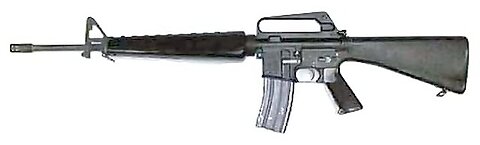
Virginia Gov. Abigail Spanberger signed SB 749 into law on Thursday, May 14, making Virginia one of the latest states to enact an “assault weapons” ban—joining at least ten others, with Rhode Island’s own ban also set to take effect July 1, 2026. Within hours, the law was hit with two separate legal challenges filed on parallel tracks—one in state court under the Virginia Constitution, one in federal court under the Second Amendment. The July 1 effective date means both cases are on an emergency footing from the start.
The State Case: GOA and VCDL Go to Lancaster County
Gun Owners of America, the Gun Owners Foundation, the Virginia Citizens Defense League, the Virginia Citizens Defense Foundation, and individual plaintiff John Crump—a firearms journalist and AmmoLand contributor—filed suit in the Circuit Court for the County of Lancaster. The 59-page complaint seeks declaratory relief and a temporary and then permanent injunction against enforcement of the challenged statutes. Crump, a Loudoun County resident and VCDL member with a valid concealed handgun permit, has stated plans to purchase firearms from Chandler’s Firearms—a Gun Owners of America Caliber Club dealer located in Kilmarnock, within Lancaster County—after the July 1 effective date.
A State-Only Theory—and Why That Matters
The most significant strategic choice in the state complaint is what it does not argue: there is no Second Amendment claim.
The plaintiffs explicitly disclaim any reliance on the federal Constitution. “Plaintiffs do not bring any claim or seek any relief under the Second Amendment to the U.S. Constitution,” the complaint states. “Rather, they proceed only under Article I, Section 13 of the Constitution of Virginia,” which states the following:
That a well regulated militia, composed of the body of the people, trained to arms, is the proper, natural, and safe defense of a free state, therefore, the right of the people to keep and bear arms shall not be infringed.
That choice appears to be calculated to keep this case in state court and beyond the reach of federal removal jurisdiction. The complaint cites Lynchburg Range & Training v. Northam, 455 F. Supp. 3d 238 (W.D. Va. 2020), for the proposition that Article I, Section 13 challenges do not create federal question jurisdiction. As a practical matter, this approach may insulate the case from being pulled into the Fourth Circuit—the immediate tactical concern—and may allow the plaintiffs to develop Virginia constitutional doctrine independently of whatever happens in the federal appellate courts.
The complaint argues that Article I, Section 13 is “at least coextensive” with the Second Amendment, and the 1971 legislative history it cites at length confirms that the General Assembly’s stated purpose was interpretive parity with the federal right. That framing, however, is a risk and a potential trap. A US Supreme Court ruling upholding assault weapons bans under the Second Amendment would reach back and undercut a state court victory premised on coextensiveness—even if such a ruling could not formally reverse it. The state-only theory is a strong near-term tactical choice, but it is not a permanent shield against an adverse federal precedent at the Supreme Court.
The Core State Constitutional Argument
On the merits, the state case argues that a ban on arms “in common use” for lawful purposes is invalid without any resort to historical tradition analysis. The complaint cites Justice Kavanaugh’s observation in Snope v. Brown, 145 S. Ct. 1534 (2025), that Americans own an estimated 20 to 30 million AR-15s and that such rifles are legal in 41 of 50 states, alongside the unanimous Court’s statement in Smith & Wesson Brands, Inc. v. Estados Unidos Mexicanos, 605 U.S. 280, 297 (2025), that the AR-15 is “both widely legal and bought by many ordinary consumers” and “the most popular rifle in the country.”
The complaint also argues that the right to acquire and transfer firearms is necessarily implied by the right to keep and bear them, citing Justice Thomas’s concurrence in Luis v. United States, 578 U.S. 5, 26 (2016): “Constitutional rights implicitly protect those closely related acts necessary to their exercise.” Crump’s lawyers are asserting that the Commonwealth cannot render the right hollow by prohibiting the commercial infrastructure through which it is exercised.
Three Arguments the Other Lawsuits May Not Raise
Beyond the core constitutional claim, Crump’s lawsuit makes three statutory arguments that are distinct from the related federal case.
First, the multicaliber magazine issue. A standard 30-round 5.56 NATO AR-15 magazine is physically identical to a 10-round .458 SOCOM magazine—the same device, holding fewer rounds of a larger caliber. The complaint argues that such magazines cannot be prohibited under Va. Code § 18.2–309.1 when used with a caliber for which their capacity falls at or below 15 rounds and seeks a declaratory judgment confirming that reading.
Second, the manufacturing gap. The magazine prohibition criminalizes import, sale, barter, transfer, and purchase—but is silent on manufacture. Building a magazine from component parts or raw materials is, on the complaint’s reading, not prohibited. Plaintiffs seek a declaratory judgment confirming that individuals may manufacture and possess magazines from kits and parts after July 1.
Third, the shotgun characteristics problem. The “assault firearms” definition for shotguns bans weapons with “one of the following characteristics”—rather than “one or more,” the phrasing used elsewhere in the statute. Applying the canon that different statutory language carries different meanings, the complaint argues that a shotgun with multiple banned features may paradoxically fall outside the definition.
The Vagueness Count
Count II raises a due process vagueness challenge under Article I, Section 11 of the Virginia Constitution. The “conspicuously” qualifier for pistol grips and thumbhole stocks is inherently subjective. The term “shroud” is undefined, and the complaint raises the possibility that the dust cover present on modern guns could qualify, since it partially encircles the barrel and prevents the non-trigger hand from being burned. And “shotgun” is undefined entirely, leaving the status of .410-bore revolvers like the Taurus Judge an open question.
The State Legal Team
The complaint is signed by attorneys from three Virginia firms: David G. Browne of Spiro & Browne in Glen Allen; Robert J. and William J. Olson of William J. Olson, P.C. in Vienna; and Oliver M. Krawczyk and Gilbert Ambler of Ambler Law Offices in Winchester. This team is not new to this theory or this courtroom posture. Olson, Browne, and Ambler worked together on Stickley v. City of Winchester—a Virginia circuit court challenge under Article I, Section 13, that produced a preliminary injunction against a Winchester firearms ordinance. The Stickley court held that Bruen’s textual and historical methodology applies to the state constitutional right and that a prohibition on firearms in public places is unconstitutional. That decision appears to be the direct template for the relief sought here.
Olson’s Second Amendment docket is extensive: the firm has filed its 200th amicus brief at the US Supreme Court, with firearms litigation spanning every federal circuit. In Virginia specifically, the firm has litigated Lynchburg Range & Training v. Northam, VCDL v. City of Roanoke, Hyland v. Winchester, and Stickley. National cases include challenges to the ATF’s frame-and-receiver rule, Antonyuk v. Hochul (New York’s Concealed Carry Improvement Act), and an amicus brief in Peterson v. United States challenging the NFA suppressor registration scheme under Bruen.
The Federal Case: McDonald v. Katz, No. 1:26-cv-01305 (E.D. Va.)
The companion federal case was filed the same day in the Alexandria Division of the US District Court for the Eastern District of Virginia. The plaintiffs are two Virginia residents—Justin McDonald of Goochland County and Anthony Groeneveld of Prince William County—along with the NRA, Firearms Policy Coalition, and Second Amendment Foundation. The defendants are Virginia State Police Superintendent Col. Jeffrey Katz, the Commonwealth’s Attorneys for Goochland and Prince William Counties, and the Sheriffs of both counties.
Lead counsel is the Washington, DC firm of Cooper & Kirk, PLLC, with David H. Thompson, Peter A. Patterson, and William V. Bergstrom appearing pro hac vice, joined by local Virginia counsel P. Thomas DiStanislao and Michael H. Brady of Whiteford, Taylor & Preston in Richmond.
The complaint is a lean 24 pages—a contrast to the 59-page state filing. It advances a single count under 42 U.S.C. § 1983, alleging deprivation of rights under the Second and Fourteenth Amendments. There are no vagueness claims, no statutory interpretation arguments, no ancillary counts. Everything extraneous to the core constitutional question has been stripped out. The reason becomes clear in paragraph 6, which contains the most consequential sentence in the entire filing:
“Plaintiffs acknowledge that the relief they request here is foreclosed by Bianchi v. Brown, 111 F.4th 438 (4th Cir. 2024) (en banc), and Kolbe v. Hogan, 849 F.3d 114 (4th Cir. 2017) (en banc). But those cases were wrongly decided.”
This is a de facto admission by the plaintiffs that they expect to lose at both the district court and Fourth Circuit levels. Bianchi and Kolbe are controlling Fourth Circuit precedents upholding Maryland’s assault weapons ban. No district court in the circuit would likely deviate from them. The complaint appears designed to build a clean record for a petition for certiorari to the US Supreme Court—a court “competent to” overrule the Fourth Circuit, in the complaint’s own phrasing.
The Fourth Circuit is the only federal circuit that has comprehensively upheld assault weapons bans under Bruen. Other circuits have produced conflicting signals. SCOTUS denied certiorari in Snope v. Brown last year, with Justice Thomas dissenting sharply and Justice Kavanaugh writing separately to flag the Court’s eventual need to resolve the question. A clean Virginia record from the Fourth Circuit—with a district court and circuit court applying Bianchi—gives the Court a vehicle on which to grant cert and resolve the question on which the circuits are fracturing.
Earlier this month, the Justice Department filed suit against the city of Denver and the state of Colorado over their similar “assault weapons” bans. What continues to puzzle me is why the Trump Justice Department has, at least as of this date, declined to weigh in on a Second Amendment case that has been relisted for potential review by the Supreme Court for months now: Viramontes v. Cook County (the Illinois “assault weapons” ban case). The two Colorado cases will take months, and perhaps longer, to be resolved, whereas the Viramontes case has been ripe for federal intervention since last year. It may be that the plaintiffs in McDonald v. Katz are hoping that prior statements by several Supreme Court justices to take up an “assault weapons” ban case will mean that their case can become the vehicle for a speedier resolution of the issue.