
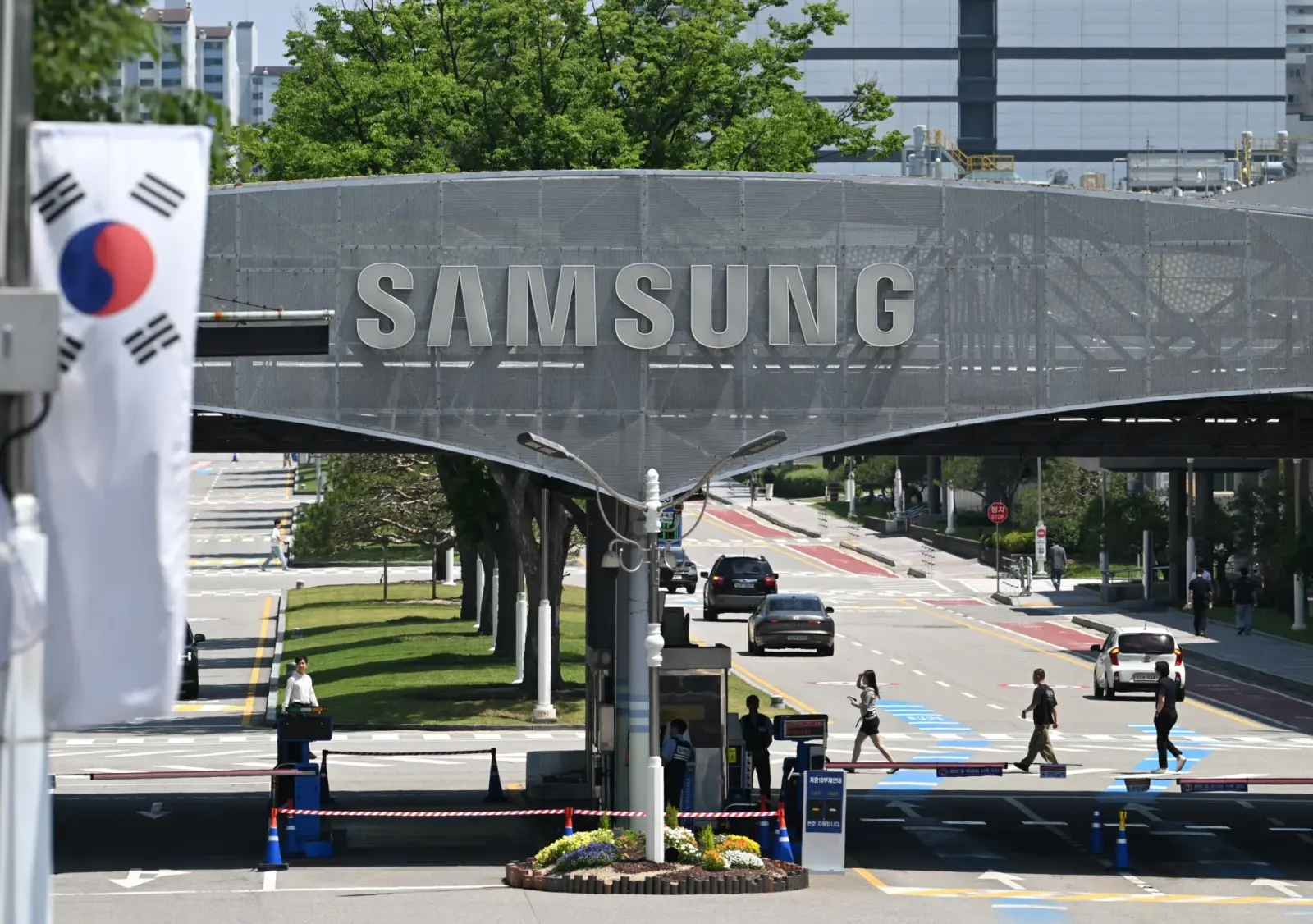
Samsung Electronics has led a €3 billion funding round into French AI company Mistral, but the more consequential part of the deal for markets is where the capital is going: compute infrastructure and data centres that Mistral increasingly wants to own rather than rent.
Mistral announced the Series D on September 8 at a post-money valuation above €21 billion, or roughly $24 billion. Samsung led the round, with the Scaleup Europe Fund, managed by EQT, and existing investor PSG Equity as co-leads. Advent, funds and accounts managed by BlackRock and the Grand Duchy of Luxembourg joined as new investors.
The €21 billion and $24 billion figures describe the same valuation in different currencies. The new valuation is almost twice the €11.7 billion level Mistral reached in its €1.7 billion ASML-led Series C in September 2025.
Mistral called the latest transaction “the largest equity fundraising round ever completed by a European technology company.” That superlative is Mistral’s claim and carries that specific scope.
Samsung Is Buying Into the Infrastructure Layer
CEO Arthur Mensch told CNBC that Mistral intends to use the new capital to expand infrastructure, including building and owning more of its own data centres while continuing to rent additional computing capacity.
The longer-term ambition is to rely increasingly on infrastructure Mistral controls itself. Mensch said the amount of compute owned by the company is expected to grow by roughly 100% over the next five years.
That fits a wider infrastructure plan Mistral disclosed in August. The company is targeting 200 megawatts of European capacity by the end of 2027 and up to 1 gigawatt by 2030, turning what began as an AI-model company into a much more capital-intensive compute operator.
The distinction matters. Mistral is no longer raising money principally to pay researchers and train another generation of models. It is increasingly putting physical infrastructure — GPUs, power, buildings and long-term capacity — onto its own economic footprint.
Samsung Has a Strategic Reason to Lead the Round
Samsung has now provided another piece of the rationale.
In a September 9 announcement, Samsung said it had entered a strategic partnership with Mistral alongside its lead investment. Samsung plans to integrate Mistral’s AI services, including Mistral Large, across its semiconductor operations and develop customized on-premises AI models for chip engineering and manufacturing.
That makes the transaction more than a financial bet on a European AI laboratory. Samsung is simultaneously a memory and semiconductor supplier to the AI infrastructure cycle and a prospective user of the software being financed.
Mistral’s previous round followed a similar pattern: ASML led the €1.7 billion Series C and entered a strategic relationship with the company.
Microsoft Is Already Paying for European Compute
The new equity also sits alongside a separate infrastructure agreement with Microsoft.
Microsoft and Mistral announced a multibillion-dollar agreement in July under which Microsoft will use part of Mistral’s expanded European GPU infrastructure for cloud and AI services. The build-out is expected to use thousands of Nvidia Vera Rubin GPUs. Microsoft did not participate in the new Series D.
Mensch has also said Mistral is on track to exceed $1 billion in annual recurring revenue before year-end, a forward-looking management target rather than reported revenue.
The AI Trade Is Becoming a Balance-Sheet Trade
For markets, that is the more useful way to read Samsung’s €3 billion commitment.
AI infrastructure increasingly requires someone to fund the data centre, GPUs, electricity and debt before the revenue arrives. FinanceFeeds has examined the same issue in its analysis of CoreWeave, where the value of AI demand has to be weighed against the cost of financing enormous infrastructure requirements. FinanceFeeds’ CoreWeave stock forecast
Mistral is approaching the problem differently: strategic equity from Samsung and ASML, customer-backed compute demand and a major Microsoft capacity commitment.
The common denominator is still capital.
The AI race is moving beyond who owns the best model. Increasingly, it is about who can afford to own the machines, buildings and power underneath it.