
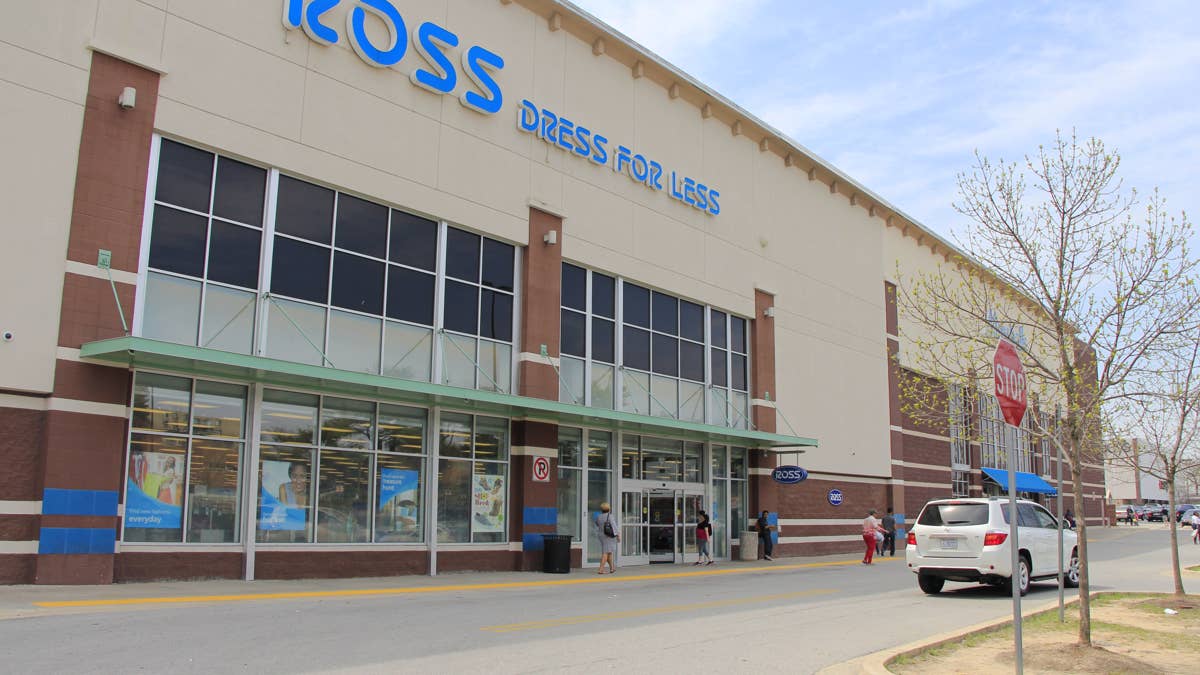
Ross Stores, which also owns dd’s Discounts, has recently debuted in a new market as it expands its store footprint. The move comes as it continues to build momentum with shoppers.
In the second quarter of 2026, the off-price retailer’s comparable store sales climbed 10% year over year, while its operating profit rose nearly 73%, according to its latest earnings report.
Recent Placer.ai data also revealed that foot traffic at Ross Dress for Less stores increased 16.4% year over year, while traffic at dd’s Discounts rose 8.4%.
On an earnings call in August, Ross Stores CEO Jim Conroy said that, despite the current “inflationary economy,” the company is attracting customers from “a broad range of income demographics and age cohorts.
“We saw gains from new and lapsed customers, along with more frequent trips and higher spending from existing customers, reflecting deeper engagement with both of our chains,” said Conroy.
Ross debuts in Massachusetts amid 51 new store openings
Amid increased consumer demand, Ross has rapidly expanded its store footprint.
Between September and October, the company opened 41 Ross Dress for Less locations and 10 dd’s Discounts stores across 17 states, including Massachusetts for the first time, according to a recent press release.
“Building on the strong performance of our newer stores, we are excited to open our inaugural stores in Massachusetts while strengthening Ross Dress for Less’ presence in New York and other existing markets,” said Richard Lietz, executive vice president of property development at Ross Stores, in the press release.
Related: Ross Stores customers will soon feel a notable change in stores
“At dd’s DISCOUNTS, we are pleased to further expand in our established core markets of California, Florida, and Texas,” he continued.
The new store openings complete Ross’ store growth plans for fiscal 2026, which include adding 115 new locations throughout the year. Currently, the company operates 2,377 Ross Dress for Less and dd’s Discounts locations across 45 states, Puerto Rico, the District of Columbia, and Guam.
Lietz said Ross plans to significantly increase its store count as more customers seek value.
“We remain confident in the long-term opportunities for both brands,” he said. “As customers increasingly seek great brands at great prices, Ross’ off-price offering continues to resonate, and we believe we are well positioned to grow to at least 2,900 Ross Dress for Less and 700 dd’s DISCOUNTS locations over time.”
Laser1987 / Getty Images
Why consumers are turning to Ross and other off-price retailers
Ross isn’t the only off-price retailer that has recently seen a boost in sales.
TJX Companies revealed in its most recent earnings report that net sales in its TJ Maxx, Marshalls, and Sierra stores increased 3% year over year in the second quarter of 2026.
Placer.ai data also revealed that while foot traffic at TJ Maxx and Marshalls generally remained near last year’s levels during the quarter, it still outperformed the traditional apparel sector’s 3.5% year-over-year decline.
U.S. consumers have increasingly been turning to off-price retailers as prices continue to rise nationwide.
More Retail:
- Ross Stores customers will soon feel a notable change in stores
- Publix struggles to reverse concerning customer behavior
- Home Depot faces uphill battle amid a growing customer problem
According to Consumer Price Index data from the U.S. Bureau of Labor Statistics, prices for all goods and services rose 3.4% year over year in August. Apparel prices increased 3.6% during that period, while footwear prices also climbed 3.6%.
As prices rise, a survey by Fashion by Informa found that 66% of U.S. consumers are prioritizing value for money when shopping for fashion, far surpassing trendiness, which was cited by only 10%.
Also, 92% of consumers plan to change their fashion shopping habits, including delaying purchases, spending less, or switching to off-price retailers to save money.
In a July note, Lorraine Hutchinson, senior research analyst at BofA Global Research, emphasized that the “off-price playbook,” in which companies “procure stronger brands at better value,” continues to successfully boost customer spending.
“The inflationary macro backdrop also creates a good environment for trade-down, allowing consumers to stretch a tight budget, and off-price has responded with sharper values,” wrote Hutchinson.
Amid this shift in consumer behavior, the global off-price retail market is projected to grow from $349.22 billion in 2025 to $582.14 billion by 2031 at an 8.89% compound annual growth rate (CAGR), according to a forecast from research firm TechSci Research.
Related: Kohl’s expands in-store partnership as customers look elsewhere